Why I Finally Found Calm: My Real Meditation Journey That Actually Works
For years, I thought meditation was just sitting quietly—until I realized it’s more like mental training. Overwhelmed by stress and restless thoughts, I gave it a real try, not just a five-minute experiment. What changed? A simple, consistent practice that reshaped my focus, sleep, and mood. This isn’t about perfection; it’s about showing up. If you’ve ever doubted whether meditation truly helps, this is your sign to explore it—no hype, just real effects that build over time.
The Breaking Point: When Stress Won
There was a time when getting through the day felt like running a marathon with no finish line. The constant buzz of notifications, the never-ending to-do list, and the pressure to keep everything together left me exhausted, even when I hadn’t physically moved. Sleep became elusive—lying in bed for hours, mind racing over yesterday’s conversations or tomorrow’s deadlines. Mornings started with a sense of dread, not energy. I was busy, but not productive. Present, but not engaged. The breaking point came during a routine grocery trip when I found myself near tears in the cereal aisle, overwhelmed by a choice between oat loops and bran flakes. That moment was a wake-up call: something had to change.
Like many, I tried quick fixes—drinking more water, cutting caffeine, even buying a journal I never opened. I downloaded apps promising instant relaxation, listened to calming music, and took weekend naps. But the relief was temporary. The real issue wasn’t my schedule or diet; it was my mind’s inability to rest. I realized I needed a tool that addressed the root, not the symptoms. That’s when I first considered meditation seriously—not as a spiritual escape, but as a practical method to regain control. I wasn’t looking for enlightenment. I just wanted to stop feeling like a live wire.
At that point, I didn’t know how to begin. The idea of sitting still for 20 minutes seemed impossible. I assumed meditation was for people with perfect posture, serene homes, and hours to spare—people unlike me. But desperation led to curiosity. I started reading about mindfulness not as a mystical practice, but as a form of mental hygiene. Research from institutions like Harvard and the Mayo Clinic showed that regular meditation could reduce cortisol levels, improve emotional regulation, and even support heart health. It wasn’t magic. It was science. And for the first time, I saw meditation not as a luxury, but as a necessity.
Debunking Myths: What Meditation Really Is (and Isn’t)
Before I could commit, I had to let go of the myths that had held me back for years. One of the biggest misconceptions is that meditation is about stopping your thoughts. That idea alone had discouraged me in the past—how could I possibly empty my mind when it was so full? The truth is, meditation isn’t about thought suppression. It’s about awareness. It’s learning to notice your thoughts without getting caught in them, like watching clouds pass in the sky. You don’t stop the wind, but you can learn not to be blown over by it.
Another myth is that meditation leads to instant peace or bliss. While some sessions can feel calming, many don’t. Some days, your mind will be louder than ever. The goal isn’t to feel good every time, but to build the skill of returning to the present moment, again and again. Think of it like physical exercise: you wouldn’t expect to run a marathon after one jog around the block. Similarly, mental strength develops gradually. Each time you notice distraction and gently refocus, you’re doing the mental equivalent of a bicep curl.
Scientific studies back this up. Neuroimaging research has shown that regular meditation can increase gray matter in brain regions linked to memory, emotional regulation, and self-awareness. It can reduce activity in the amygdala, the brain’s fear center, leading to lower stress responses over time. These changes aren’t reserved for monks or yogis. They’re accessible to anyone who practices consistently, regardless of belief system or background. Meditation doesn’t require special clothing, incense, or hours of silence. All it takes is a few minutes, a relatively quiet space, and the willingness to try.
It’s also not tied to any religion, despite common associations. Mindfulness-based stress reduction (MBSR), a widely used program developed at the University of Massachusetts, is secular and evidence-based. It’s taught in hospitals, schools, and corporate wellness programs. The core idea is simple: pay attention, on purpose, without judgment. That’s it. You don’t need to chant, burn candles, or sit cross-legged. You can meditate in a chair, on the couch, or even standing in line at the post office. The practice meets you where you are—mentally and physically.
My First Real Try: From Skeptic to Committed
My first real attempt at meditation was anything but peaceful. I sat on the edge of my bed, closed my eyes, and tried to focus on my breath. Within seconds, I was thinking about whether I’d turned off the stove, then remembering an email I forgot to send, then wondering if meditation was even working. After three minutes, I gave up, convinced I was doing it wrong. I almost quit before I began. But then I came across a quote that stuck with me: “The mind is not meant to be controlled. It’s meant to be befriended.” That shifted my perspective.
I decided to try again, this time with a guided meditation app. I chose one with a calm, reassuring voice—someone who didn’t expect perfection. The first session was only five minutes long, and it walked me through each step: noticing my breath, acknowledging distractions, and gently returning focus. It wasn’t about getting it right; it was about practicing. I did it again the next day. And the day after that. The key was consistency, not duration. I didn’t need to meditate for an hour. I just needed to show up.
I paired it with an existing habit—drinking my morning coffee. After pouring the cup, I’d sit for five minutes before taking a sip. That small cue made it easier to remember. I didn’t force long sessions. Some days, I only managed two minutes. But I kept going. Over time, I noticed subtle changes. I was less reactive when the kids spilled juice on the carpet. I paused before snapping at a slow driver. I wasn’t transformed overnight, but I was becoming more aware of my responses. That awareness was the beginning of change.
After a few weeks, I started looking forward to those quiet moments. They became a refuge, not a chore. I didn’t feel enlightened, but I felt calmer, clearer. I wasn’t escaping life—I was engaging with it more fully. The shift wasn’t dramatic, but it was real. And for the first time, I understood that meditation wasn’t something I did to fix myself. It was something I did to care for myself.
The Core Practice: Simple Methods That Stick
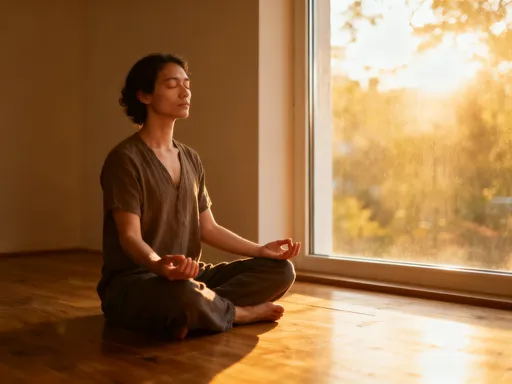
What finally made meditation stick wasn’t complexity, but simplicity. I focused on three techniques that were easy to learn, required no equipment, and could be done almost anywhere. The first was **focused breathing**. This involves paying attention to the natural rhythm of your breath—feeling the air enter your nostrils, fill your lungs, and leave your body. When your mind wanders (and it will), you gently bring it back. The act of returning, not perfection, is the practice. Even one minute of this can reset your nervous system.
The second technique was the **body scan**. This involves slowly moving your attention from the top of your head to the tips of your toes, noticing any tension, warmth, or sensation without trying to change it. It’s especially helpful before bed, as it grounds you in the present and signals to your body that it’s time to rest. I started with five minutes, focusing on one area at a time—forehead, jaw, shoulders, hands. Over time, I became more attuned to where I held stress, often in my neck and lower back.
The third method was **mindful observation**. This means picking an everyday object—a flower, a coffee mug, a tree outside your window—and studying it with full attention. Notice its color, texture, shape, and any movement. When thoughts arise, acknowledge them and return to the object. This trains your mind to stay present, even in ordinary moments. I often did this while waiting for the kettle to boil or during a short walk.
The key to making these methods work was consistency, not time. Research shows that short, daily sessions are more effective than occasional long ones. Five to ten minutes a day builds neural pathways more reliably than one hour once a week. I also used habit stacking—linking meditation to an existing routine, like brushing my teeth or after lunch. Over time, it became automatic. I didn’t need motivation. I just needed the cue. And when I missed a day? I didn’t berate myself. I simply began again the next day.
Noticeable Shifts: How My Health Improved
The changes didn’t happen overnight, but they were undeniable. One of the first improvements was in my sleep. I used to lie awake for hours, replaying conversations or worrying about the future. After a few weeks of regular meditation, I found it easier to let go of those thoughts. I wasn’t forcing sleep—I was creating the mental conditions for it to come naturally. I fell asleep faster and woke up feeling more rested, even if the night was short.
My anxiety levels also decreased. I still felt stress, but it didn’t consume me the way it once did. I noticed a gap between a triggering event—like a missed deadline or a family disagreement—and my reaction. That gap gave me space to choose how to respond, rather than react impulsively. I became less reactive in conversations, more patient with my children, and more compassionate with myself. I didn’t become perfect, but I became more balanced.
My focus improved, too. At work, I could concentrate for longer periods without feeling mentally drained. I made fewer careless mistakes and felt more in control of my time. Decision-making became easier because I wasn’t operating from a place of overwhelm. I could weigh options calmly, without the pressure of needing to fix everything immediately. Even simple tasks, like cooking dinner or folding laundry, felt more manageable because my mind wasn’t racing in ten directions.
These benefits weren’t isolated. They fed into each other. Better sleep supported emotional stability. Emotional stability improved relationships. Stronger focus increased productivity. It was a positive feedback loop. I didn’t need to add more to my day—I just needed to change how I experienced it. Meditation didn’t solve all my problems, but it gave me the mental clarity to face them with more resilience.
Making It Last: Building a Sustainable Habit
Like any new habit, there were days I didn’t feel like meditating. Some mornings, I was too tired. Others, I was too busy. The temptation to skip it was strong, especially when life got hectic. But I learned that the days I wanted to skip were often the days I needed it most. The key to sustainability wasn’t willpower—it was strategy.
I started by lowering the bar. On tough days, I allowed myself to meditate for just one minute. Often, that was enough to get started, and I’d end up doing more. I also used a simple calendar tracker, marking each day I practiced with a checkmark. Seeing the chain grow motivated me to keep it going. I joined an online community of meditators, not for advice, but for silent accountability. Knowing others were doing it too made me feel less alone.
I also made small environmental changes. I created a quiet corner with a cushion and a soft blanket—nothing elaborate, just a dedicated space that signaled it was time to pause. I turned off notifications during my session and placed my phone across the room. These cues helped my brain shift into a calmer state more easily. I didn’t need perfect silence, but I did need to reduce distractions.
Most importantly, I practiced self-compassion. Missing a day wasn’t failure. It was part of the process. I reminded myself that meditation wasn’t another item on my to-do list to master. It was an act of care. The moment I judged myself for not doing it “right,” I was working against the very purpose of the practice. Restarting, not perfection, was the goal.
Beyond the Cushion: Meditation as a Lifestyle Upgrade
Meditation didn’t stay confined to my morning routine. It began to influence how I moved through the rest of my day. I started practicing mindfulness while walking—feeling each step, noticing the air on my skin, listening to the sounds around me. I ate more slowly, savoring each bite instead of rushing through meals. I listened more deeply in conversations, truly hearing what others said instead of planning my response. These small shifts added up to a bigger change in how I experienced life.
I began to see meditation not as a separate activity, but as a way of being. It wasn’t about escaping the world, but engaging with it more fully. My energy levels improved, not because I was doing more, but because I was wasting less mental energy on rumination and stress. I noticed fewer colds and fewer headaches, which doctors linked to lower stress levels. My mind felt clearer, my decisions more intentional.
Long-term, I’ve come to view meditation as self-care, not self-improvement. It’s not about fixing myself or becoming someone else. It’s about showing up for myself, exactly as I am. It’s a daily promise to pause, breathe, and reconnect. And the beautiful part is that anyone can do it. You don’t need special training, a quiet home, or hours of free time. You just need a willingness to begin, even if it’s messy.
Over time, meditation has become less of a practice and more of a presence. It’s not something I do. It’s something I am. And in a world that never stops moving, that presence is the most powerful gift I’ve given myself.
Looking back, my journey from skepticism to daily practice wasn’t about achieving perfection. It was about building resilience, one breath at a time. Meditation didn’t erase my stress or solve every problem, but it gave me the tools to face them with greater calm and clarity. The benefits—better sleep, improved focus, emotional balance—are real, but they’re not instant. They grow slowly, like a garden tended with care. Patience and consistency matter more than intensity.
What I’ve learned is that meditation isn’t another task to master or a box to check. It’s an act of self-respect. It’s choosing to pause in a world that glorifies busyness. It’s acknowledging that your mental health is just as important as your physical health. You don’t need to meditate for hours. You don’t need to sit in silence. You just need to begin—anywhere, anytime, in whatever way feels possible.
If you’ve ever doubted whether meditation can work for you, know this: it’s not about being good at it. It’s about showing up. The mind will wander. That’s normal. The session might feel restless. That’s okay. The power isn’t in the perfect moment—it’s in the return. Each time you notice distraction and gently come back, you’re strengthening your mind. And over time, those small moments of awareness add up to meaningful change. Starting, even imperfectly, is already progress. And sometimes, that’s enough.