Wandering Through Time: Where Arles’ Soul Lives in Every Stone
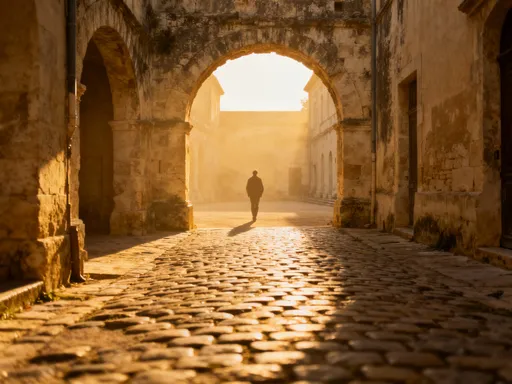
You know that feeling when a place just gets you? Arles isn’t just another French town—it’s a living museum where history, art, and Provençal soul collide. I wandered its sun-drenched streets and stumbled upon ancient amphitheaters, Van Gogh’s haunting footsteps, and hidden courtyards humming with centuries of stories. This is cultural immersion at its most authentic—no crowds, no scripts, just raw, breathtaking beauty around every corner. The light here doesn’t merely shine; it lingers, casting golden hues on stone walls that have stood for nearly two millennia. In Arles, time doesn’t feel linear. It folds in on itself, allowing you to step into the echoes of Roman senators, medieval monks, and post-impressionist painters—all without leaving the present moment. This is not a city to be rushed through, but felt, slowly and deeply.
The First Step: Arriving in Arles with No Plan
Arriving in Arles without a map or itinerary is not a travel mistake—it’s the ideal way to begin. The city greets visitors not with the clamor of a major metropolis, but with a quiet dignity, as if it has been waiting patiently for those willing to listen. Trains from Marseille or Avignon glide into the modest station, and within ten minutes, you can be walking beneath plane trees whose leaves whisper in the Provençal breeze. The transition from modern transit to timeless streets is seamless, almost imperceptible. There are no grand gates or ticketed entrances—just a gentle invitation to step into another rhythm of life.
What makes Arles uniquely suited to unplanned exploration is its scale. Compact and walkable, the historic center unfolds like a series of intimate chapters, each turning naturally into the next. You might begin near the Rhône River, where the Pont de Langlois once inspired Van Gogh, and end up in a quiet square where elderly men play pétanque under the shade of a plane tree. The lack of a rigid agenda allows space for serendipity—the sudden discovery of a sunlit courtyard, the scent of thyme drifting from a hidden garden, or a local baker who offers a warm word and a sample of freshly baked fougasse.
Modern travelers often approach destinations with checklists: monuments to photograph, restaurants to review, experiences to capture. But Arles resists such efficiency. It rewards slowness. The city’s charm lies not in its ability to perform for tourists, but in its quiet confidence—a sense that it has endured long before visitors arrived and will continue long after they’ve left. By arriving without a plan, you align yourself with this rhythm. You stop consuming the city and begin experiencing it. You become a wanderer, not a tourist, and in that shift, Arles begins to reveal itself.
Roman Echoes: Walking Through Ancient Arles
Arles was once one of the most important cities in Roman Gaul, and its ancient heart still beats beneath the modern streets. The Arena of Arles, a UNESCO World Heritage site, stands as a powerful testament to that legacy. Built in the 1st century AD, this elliptical amphitheater once hosted gladiator battles and public spectacles, seating over 20,000 spectators. Today, it remains a vibrant cultural venue, hosting bullfights during the Feria and open-air concerts in summer. Unlike many ancient ruins preserved behind glass or rope barriers, Arles’ Roman monuments are not relics—they are part of daily life, still resonating with human energy and communal gathering.
The Ancient Theatre of Arles, nestled near the city’s central square, offers another window into the past. Once a stage for Roman tragedies and comedies, it now hosts the annual Journées Théâtrales, a theater festival that brings classical and contemporary performances to life under the open sky. The acoustics remain remarkable; a whisper from the stage can carry to the top tiers, just as it did nearly two thousand years ago. These sites are not frozen in time but adapted, their original purposes transformed yet still honored through continued use.
To experience these monuments without the press of crowds, timing is essential. Early morning visits, particularly in spring or autumn, offer the best conditions. The light is soft, the air cool, and the stones still hold the night’s quiet. You might find yourself alone in the arena, tracing the curve of ancient arches with your eyes, or sitting in the upper tiers of the theater, imagining the murmur of an audience long gone. Even in summer, arriving just before opening or staying after most tourists have left allows for moments of solitude. The city’s commitment to preservation ensures these sites remain accessible, but it is the traveler’s patience that unlocks their deeper resonance.
Van Gogh’s Footsteps: Art as Urban Memory
In 1888, Vincent van Gogh arrived in Arles seeking light, color, and renewal. Over the next fourteen months, he produced more than 300 works, including some of his most iconic paintings—The Yellow House, Café Terrace at Night, and Starry Night Over the Rhône. Today, walking through Arles is like stepping into a living canvas. The places he painted still exist, not as reconstructions, but as functioning parts of the city. The Café Van Gogh, once known as Café de la Nuit, still serves coffee on the same corner where he set up his easel, its yellow walls glowing under the evening lights.
What makes Arles’ connection to Van Gogh so profound is not mere commemoration, but continuity. The city does not treat his presence as a marketing opportunity. There are no overpriced souvenirs or themed attractions. Instead, there is a quiet reverence—a sense that inspiration once lived here, and in some way, still does. Standing at the edge of the Rhône, where he painted the shimmering stars reflected in the water, one feels the weight of artistic devotion. The same golden light that captivated him still bathes the city each morning and evening, a reminder that beauty is not invented, but revealed.
The Fondation Vincent van Gogh Arles, housed in a restored 18th-century mansion, serves as a contemporary bridge between his legacy and modern art. Rather than displaying original works—most of which are in major museums abroad—the foundation hosts rotating exhibitions that explore themes central to Van Gogh’s vision: color, emotion, nature, and the human condition. It is a place of reflection, not spectacle. Here, visitors are invited not just to see, but to feel. The foundation also supports emerging artists, ensuring that Arles remains a place where creativity is nurtured, not just remembered.
Hidden Courtyards and Cloisters: The Quiet Heart of Culture
Beyond the well-trodden paths lies a quieter Arles—one of hushed courtyards, cloisters, and forgotten chapels. The Cloître Saint-Trophime, attached to the 12th-century church of the same name, is one such sanctuary. Its arcade of Romanesque columns, carved with biblical scenes and floral motifs, encloses a garden where sunlight filters through ancient stone tracery. The air is cool, the silence profound. This is not a place for hurried glances, but for stillness. It invites contemplation, offering a rare pause in a world that rarely slows down.
These quiet spaces are essential to understanding Arles’ soul. They are not tourist attractions in the conventional sense, but moments of grace embedded in the urban fabric. A tucked-away chapel might open only on certain days, its door unmarked, its interior illuminated by a single shaft of light. A private courtyard, visible only through an arched gateway, might bloom with jasmine and rosemary, its fountain murmuring softly. These places are not hidden by design, but by time—preserved because they have not needed to change.
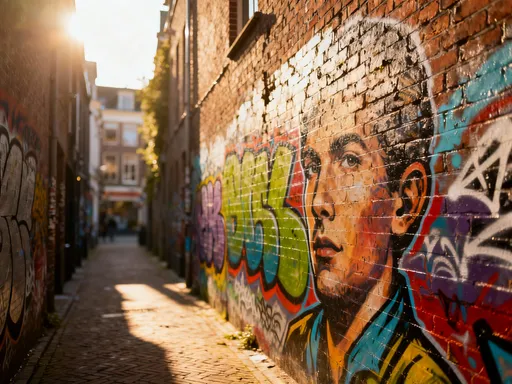
Discovering them requires no special access, only attention. The best way to find them is to wander without destination, to follow narrow alleys that seem to lead nowhere, to pause when a doorway catches the light just so. In these moments, the city reveals its layers—not as a museum exhibit, but as a lived experience. The stones are warm underhand, the shadows deep and cool. You begin to understand that culture is not only in grand monuments, but in the quiet spaces between them—where time slows, and the past feels close enough to touch.
Local Life as Cultural Expression: Markets, Cafés, and Rhythms
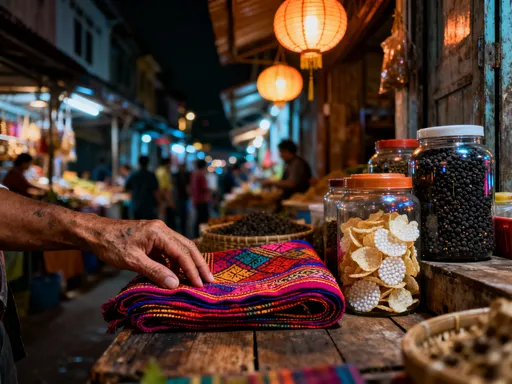
Arles’ true culture is not confined to its monuments or museums—it lives in its daily rhythms. The Marché d’Arles, held every Wednesday and Saturday morning in the Place du Forum, is a vibrant expression of Provençal life. Stalls overflow with sun-ripened tomatoes, bundles of lavender, rounds of Banon cheese wrapped in chestnut leaves, and olives cured in herbs. Vendors call out greetings in a lilting Occitan-influenced French, their voices blending with the clatter of baskets and the hum of conversation. This is not a market staged for tourists; it is where locals shop, barter, and connect.
Equally revealing are the sidewalk cafés, where life unfolds at a leisurely pace. At a corner table, an elderly woman reads a newspaper with a small coffee. Two friends linger over glasses of pastis, their laughter rising above the clink of ice. A bookseller closes his stall and joins them, adding to the conversation. These moments are not performances—they are the fabric of community. To sit and observe, to order a simple meal and stay too long, is to participate in a culture that values presence over productivity.
The language, too, carries history. While French is the dominant tongue, traces of Occitan—the traditional language of southern France—still linger in place names, expressions, and local songs. It is a reminder that Arles has always been a crossroads, shaped by Roman, medieval, and Mediterranean influences. To experience the city fully is to embrace its rhythms: the slow unfolding of a market day, the afternoon pause when shops close, the evening stroll along the river. These are not disruptions to a packed itinerary, but the essence of what makes Arles feel alive.
Festivals in the Blood: When Tradition Takes Center Stage
Arles does not merely preserve tradition—it lives it. The Feria d’Arles, held multiple times a year but most prominently in Easter and late summer, is the city’s most visible expression of cultural continuity. Rooted in centuries-old Provençal customs, the festival celebrates the region’s bull-raising heritage. Unlike Spanish bullfighting, the French version—known as *course camarguaise*—does not involve killing the animals. Instead, young men known as *raseteurs* attempt to remove tassels from the bull’s horns in a display of agility and courage. The bulls, bred in the nearby Camargue wetlands, are revered as symbols of regional identity.
The festival is not just about the arena. The entire city transforms. Streets fill with music—accordions, brass bands, traditional Occitan songs. Women wear the elegant *fougasse* dress, with embroidered bodices and full skirts, while men don the flat-brimmed Camargue hat. Processions wind through the old town, and communal meals are shared in public squares. The atmosphere is one of joy, pride, and deep-rooted belonging. It is a celebration not of spectacle, but of community.
For visitors, attending a Feria is a privilege, not a right. Respect is essential. This is not entertainment in the commercial sense, but a cultural ritual. Observing quietly, dressing modestly, and following local customs—such as not photographing participants without permission—are small but meaningful gestures. Timing a visit to coincide with a Feria offers a rare glimpse into Arles’ living soul, but it requires humility. One must come not to judge, but to witness—to understand that some traditions are not meant to be fully explained, only experienced.
Wandering as a Way of Seeing: Why Slowness Reveals More
In an age of curated travel experiences and Instagrammable moments, Arles offers a different kind of invitation: to wander without purpose. This is not aimlessness, but a form of deep attention. When you walk without a map, you begin to notice what you might otherwise miss—the way light shifts on a stone wall at 4 p.m., the sound of a fountain in a hidden courtyard, the scent of rosemary carried on the wind. You stop looking for what you’ve been told to see and start discovering what is actually there.
Wandering reshapes perception. It allows you to move through time as Arles does—not as a linear progression, but as a layered experience. You might stand before the Roman amphitheater and, in the next moment, find yourself in a quiet alley where Van Gogh once painted. There is no need to force connections; they arise naturally, like memories surfacing in a dream. This kind of travel is not efficient, but it is transformative. It asks not what you can take from a place, but what you are willing to receive.
Practicing this mindset begins with small shifts. Put the map away. Let the light guide you—follow where it pools on the pavement or glows through an archway. Listen to the rhythms of the city: the chime of a church bell, the murmur of a conversation in a café, the distant music of a street performer. Ask questions, but not for information—ask to connect. A simple “How do you like this light today?” to a shopkeeper can open a door far wider than any guidebook. Wandering, in this sense, becomes a form of presence—an act of seeing, feeling, and being seen in return.
Arles as a State of Mind
Arles is more than a destination; it is an invitation to a different way of traveling. In a world that often measures experience by quantity—how many sites, how many photos, how many countries—it reminds us of the power of depth. Here, culture is not something to be consumed, but absorbed. History is not a series of dates, but a living presence. Art is not confined to galleries, but woven into the streets. And beauty is not something to be captured, but felt.
To wander through Arles is to remember that travel can be slow, quiet, and profoundly personal. It is to understand that the most meaningful moments are often unplanned—the chance encounter, the unexpected discovery, the silence that speaks louder than words. The city does not demand attention; it offers it to those who are willing to pause.
So let Arles reshape your idea of what travel can be. Leave the checklist behind. Step into the light. Let the stones tell their stories. And in the quiet moments between footsteps, you may find that you are not just visiting a place—but becoming part of its story, too.