You Won’t Believe These Hidden Art Spots in The Hague
The Hague isn’t just politics and palaces—it’s a visual playground for art lovers and photographers. I stumbled upon vibrant murals, surreal installations, and quiet galleries tucked in unexpected corners. Each spot tells a story, bursting with color and creativity. If you’re chasing authentic, off-the-beaten-path moments with your camera, this city delivers. Let me take you through the most stunning art spaces where every frame feels alive. Trust me, you’ve never seen The Hague like this before.
Beyond the UN: The Hague’s Underrated Art Identity
The Hague is often recognized as the administrative heart of the Netherlands, home to international institutions, government buildings, and diplomatic envoys. Its polished image as a city of protocol and policy can overshadow a far more expressive side—one pulsing with color, texture, and imagination. Yet beneath the formal surface lies a thriving, accessible art scene that invites both locals and visitors to explore creativity in its many forms. While tourists may flock to Amsterdam for Van Gogh or Rotterdam for avant-garde design, The Hague offers a quieter, more intimate artistic journey—one that rewards curiosity and observation.
What makes The Hague especially compelling for art and photography is the harmony between its historic urban fabric and contemporary creative energy. The city’s architecture—ranging from 17th-century canal houses to early modernist structures—provides a timeless backdrop. Natural light filters through tree-lined avenues and reflective waterways, enhancing the visual depth of both street art and gallery interiors. Unlike more commercialized art destinations, The Hague fosters a culture of creative freedom, supported by municipal programs that encourage public art, legal graffiti zones, and community-driven installations. This blend of support and spontaneity allows artists to experiment, and photographers to capture moments of raw, unfiltered expression.
Local artists have long benefited from cultural policies that prioritize accessibility and inclusion. Public funding for arts initiatives, artist residencies, and open-call mural projects has cultivated a dynamic environment where creativity isn’t confined to museums. Instead, it spills into courtyards, side streets, and repurposed buildings. These spaces, often overlooked by mainstream tourism, become stages for visual storytelling. For the discerning eye, every alleyway may hold a surprise—a hand-painted wall, a sculptural intervention, or a fleeting shadow play across textured surfaces. The Hague doesn’t shout its art; it whispers it, waiting for those who slow down to listen.
Kunstmuseum Den Haag: Where Modern Art Meets Iconic Design
Standing as a cornerstone of The Hague’s art landscape, the Kunstmuseum Den Haag is a destination where art, architecture, and photography converge. Designed by Dutch architect Gerrit Rietveld, a pioneer of the De Stijl movement, the museum’s exterior is a study in geometric clarity and bold contrasts. Its façade, with strong horizontal lines and striking use of color blocks—particularly the iconic yellow entrance—offers a powerful subject for architectural photography. The interplay of light and shadow across its angular forms changes throughout the day, making early morning and late afternoon ideal for capturing its sculptural presence.
Inside, the museum houses one of the largest collections of works by Piet Mondrian, whose evolution from naturalistic landscapes to abstract grids is laid out in a narrative that feels both intimate and monumental. For photographers, these galleries provide controlled environments where composition, color theory, and minimalism come to life. The clean lines of Mondrian’s later works echo the building’s own aesthetic, creating a visual dialogue between artwork and space. Beyond the permanent collection, the museum hosts rotating exhibitions that span modern and contemporary art, from fashion retrospectives to multimedia installations. These temporary exhibits often feature immersive environments—curtained rooms, mirrored walls, or kinetic sculptures—that double as unique photo opportunities.
Visitors are generally permitted to take non-flash photographs in most exhibition areas, though restrictions apply in special loaned collections. To make the most of your visit, arrive shortly after opening to avoid crowds and benefit from the soft, diffused light filtering through the museum’s skylights. Don’t overlook the lesser-known corners: the stairwell between floors, with its angular banisters and play of shadows, and the quiet courtyard garden, where greenery contrasts with modernist stonework. These spaces, often bypassed in favor of headline exhibits, offer moments of stillness and subtle beauty—perfect for contemplative photography.
The Street Art Pulse of Spuimarkt and Groen van Prinsterer
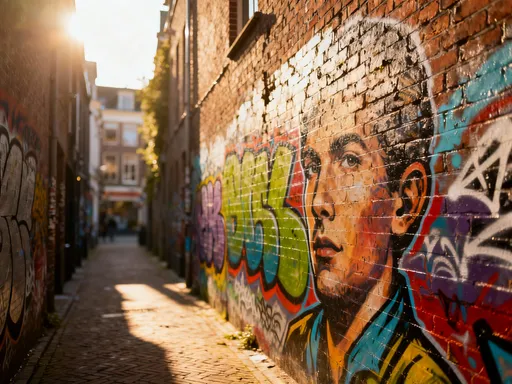
For those seeking vibrant, ever-changing visuals, the neighborhoods around Spuimarkt and Groen van Prinsterer offer a dynamic canvas of urban expression. These areas, once overlooked commercial zones, have transformed into open-air galleries where local and international artists contribute to a living, breathing art scene. Unlike static museum pieces, street art here evolves constantly—murals are painted over, new collaborations emerge, and seasonal projects bring fresh energy to the walls. This impermanence adds a sense of urgency and discovery for photographers, who know that each visit might capture a fleeting moment in the city’s visual timeline.
One standout location is the long brick wall along Groen van Prinstererstraat, where large-scale murals stretch across multiple building facades. These works often feature bold color palettes, surreal figures, and symbolic narratives that reflect social themes or local identity. The high contrast between painted surfaces and aged brick creates compelling textures, ideal for portrait photography or candid street shots. Nearby alleys, such as those branching off Spuimarkt, reveal smaller interventions—stenciled patterns, 3D optical illusions, and ceramic tile mosaics—that invite close-up exploration. These details, often missed at a glance, reward patient observation and macro photography.
The city’s support for legal graffiti has been instrumental in shaping this creative ecosystem. Through initiatives like the Urban Ink Festival and municipal mural programs, artists are given designated walls and resources to create without fear of prosecution. This collaborative approach has fostered a culture of respect between artists, property owners, and the community. As a result, the artwork feels intentional and integrated, not rebellious or disruptive. For families and solo travelers alike, walking these streets becomes an educational experience—an informal lesson in how public art can enhance urban life, spark dialogue, and beautify overlooked spaces.
Project Papeleur: A Secret Courtyard Filled with Whimsy
Tucked behind unassuming doors in the heart of The Hague lies Project Papeleur, a hidden gem that feels like stepping into a dream. This art installation, conceived by local artist collective Studio Papeleur, transforms a former industrial backyard into a whimsical world inspired by paper, folding, and light. Sculptures made from recycled materials mimic origami forms—giant cranes, blooming flowers, and floating geometric shapes—creating a surreal environment where texture and imagination take center stage. The space is intentionally intimate, designed for quiet exploration rather than mass tourism, making it a perfect subject for poetic, detail-oriented photography.
What sets Project Papeleur apart is its tactile quality. The sculptures, though large in scale, retain the delicate appearance of folded paper, catching light in ways that shift throughout the day. Morning sun casts long shadows across the courtyard, emphasizing depth and form, while overcast skies soften contrasts, allowing colors to glow with a diffused brilliance. Photographers can experiment with perspective—shooting upward to frame a paper sun against the sky, or focusing on the intricate creases and layered textures of individual pieces. The interplay between the artificial and the natural is also striking: green vines climb around paper leaves, and wind gently moves suspended elements, introducing subtle motion into still images.
Access to Project Papeleur is limited, adding to its allure. The courtyard opens during special cultural events, art weekends, or by prior appointment through local tour programs. This exclusivity ensures a peaceful atmosphere, free from the distractions of crowds. For visitors planning ahead, combining a visit with a guided art walk enhances the experience, offering context about the artists’ vision and the symbolism behind the forms. Whether capturing wide-angle scenes or macro details, the space encourages a slower, more reflective approach to photography—one that values mood, texture, and storytelling over spectacle.
The Fotomuseum Den Haag: Capturing Art Through the Lens
If Kunstmuseum Den Haag celebrates visual art broadly, The Fotomuseum Den Haag turns the lens inward—dedicating itself entirely to the art of photography. Located just steps away from its sister institution, this museum offers a meta-experience for anyone passionate about image-making. Its exhibitions range from historical retrospectives of pioneering photojournalists to experimental digital storytelling, often blurring the line between documentation and artistic expression. For visitors with a camera, the museum doesn’t just display photos—it inspires them, offering countless opportunities to study composition, lighting, and narrative flow in action.
One of the museum’s strengths is its innovative display techniques. Exhibits frequently incorporate immersive environments: rooms with projected images on multiple surfaces, interactive screens that allow visitors to explore archival material, or darkened spaces where light beams isolate single frames. These settings are not only engaging but inherently photogenic, inviting visitors to capture reflections, silhouettes, or layered visuals through glass and mirrors. While flash photography is prohibited to protect sensitive materials, natural and ambient lighting is carefully designed to enhance visibility and mood, making handheld shots both feasible and striking.
The Fotomuseum also plays a key role in promoting contemporary Dutch and international photographers, often spotlighting underrepresented voices and regional stories. Exhibitions might focus on family life in post-war Netherlands, urban transformation in European cities, or environmental changes captured over decades. These themes resonate deeply with adult audiences, particularly women aged 30 to 55, who appreciate photography as a means of connection, memory, and reflection. A visit here can easily be paired with time at the adjacent Kunsthal or a walk through the Hofkwartier, where boutique shops and cafés provide a relaxed rhythm between cultural stops.
Lumen Travo Gallery & the Jordaan-influenced Art District
For a more intimate gallery experience, the Lumen Travo Gallery in the Zeeheldenkwartier offers a refined counterpoint to the city’s larger institutions. This small but influential space specializes in contemporary painting and sculpture, with a focus on artists who explore light, space, and perception. The gallery’s minimalist interior—white walls, polished floors, and carefully placed skylights—creates an atmosphere of quiet contemplation. Natural light floods the space during midday, illuminating textures in brushstrokes and sculptural forms, making it an ideal environment for photographing artwork with clarity and depth.
The surrounding neighborhood, often compared to Amsterdam’s Jordaan for its charm and walkability, is emerging as a quiet hub for independent galleries and artist studios. Unlike busier districts, this area remains uncrowded, allowing for a more personal engagement with the art. Visitors can wander from gallery to gallery, discovering works that range from abstract expressionism to figurative realism, often meeting artists during open studio events. The slower pace encourages thoughtful observation—a quality that translates into more intentional photography. Rather than chasing iconic shots, visitors are invited to notice subtle details: the play of light on a canvas, the shadow cast by a bronze sculpture, or the way a painted surface reflects its surroundings.
Complementing the artistic offerings are cozy cafés and tea rooms where visitors can pause, reflect, and journal about what they’ve seen. These breaks are not mere interludes—they are part of the creative process, allowing space for inspiration to settle. For family-oriented travelers, the neighborhood’s safety, cleanliness, and stroller-friendly sidewalks make it accessible and enjoyable. By combining gallery visits with leisurely stops, a day in this district becomes a holistic experience of culture, comfort, and quiet beauty.
From Canvas to Cityscape: Why The Hague’s Art Spaces Inspire
The true magic of The Hague’s art scene lies in its seamless blend of public and private, permanent and ephemeral. Unlike cities where art is confined to guarded halls, here it flows freely—from museum galleries to alleyway murals, from curated exhibitions to spontaneous installations. This accessibility invites a deeper kind of engagement, one that doesn’t require expertise or pretension. For the everyday traveler, especially women who value meaningful, enriching experiences, The Hague offers a canvas where beauty, history, and creativity intersect in unexpected ways.
What emerges from this mosaic of spaces is not just a collection of photo-worthy spots, but a philosophy of seeing. The city encourages its visitors to slow down, to look closely, and to find stories in the details—a crack in the pavement beneath a mural, the way light filters through a paper sculpture, the quiet dignity of a portrait in a side gallery. These moments, though fleeting, carry emotional weight. They remind us that art is not only something to be admired from a distance but something to be lived, felt, and captured in our own way.
As you plan your next journey, consider stepping beyond the postcard views. Seek out the shadows, the side streets, the quiet courtyards. Let The Hague’s living art scene guide you toward spontaneity and connection. Whether you’re framing a shot, journaling under a tree, or simply pausing to admire a color-splashed wall, you’re participating in a broader story—one of resilience, imagination, and everyday wonder. The Hague doesn’t just display art. It invites you to become part of it.