You Won’t Believe This Hidden Food Scene in The Hague
You know that feeling when you think you’ve got a city figured out, and then it completely surprises you? That’s exactly what happened in The Hague. I went for the politics and the beaches, but stayed for the food—real, local, down-to-earth flavors hiding in plain sight. From tiny immigrant-run kitchens to market stalls with recipes passed down for generations, this city’s culinary soul is anything but ordinary. And honestly? Most tourists miss it completely. Let me show you the side of The Hague no one’s talking about.
First Impressions: Beyond the Diplomatic Facade
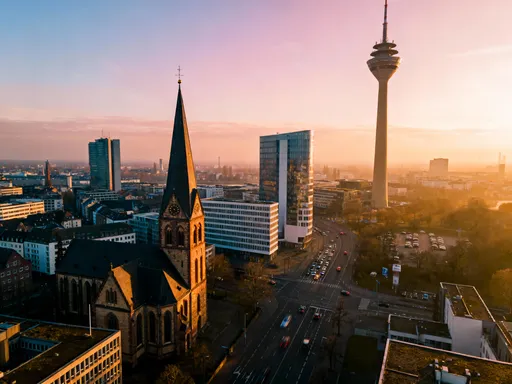
The Hague is often introduced as the city of peace and justice, home to international courts and embassies, where diplomats in tailored suits walk the tree-lined boulevards. Yet beneath this polished exterior lies a more intimate, textured reality—one defined not by protocol, but by the aroma of cumin and turmeric drifting through open market stalls, by the laughter echoing from neighborhood cafés where families gather on Sunday afternoons, and by the quiet hum of daily life in diverse residential streets. While many visitors focus on the Binnenhof or the beach at Scheveningen, the true heartbeat of the city pulses in its multicultural neighborhoods, where food tells a deeper story.
This is a city shaped by movement and migration. Over the past century, waves of people from Suriname, Turkey, Morocco, the Caribbean, and beyond have made The Hague their home, bringing with them traditions, spices, and recipes that have quietly transformed the city’s palate. Unlike Amsterdam’s tourist-saturated food markets or Rotterdam’s avant-garde dining scene, The Hague’s culinary identity is understated, authentic, and deeply rooted in community. It doesn’t advertise itself with flashy signs or Instagrammable interiors. Instead, it reveals itself slowly—in the warmth of a server who remembers your order, in the golden crisp of a freshly fried roti wrap, in the way a simple meal can feel like an invitation into someone’s family history.
The Hague’s charm lies in its duality: it is both a seat of global influence and a city of intimate local life. Its residential districts, such as Schilderswijk, Transvaalbuurt, and Moerwijk, are not postcard-perfect, but they are alive with character. These are places where children play in courtyards, where shopkeepers greet neighbors by name, and where the rhythm of life is measured not by conference schedules, but by market days and family dinners. It is here, away from the diplomatic enclaves and seaside promenades, that the city’s most compelling flavors are found—not in high-end restaurants, but in modest storefronts where food is made with pride, patience, and generations of inherited knowledge.
The Pulse of Local Life: Visiting the Haagse Markt
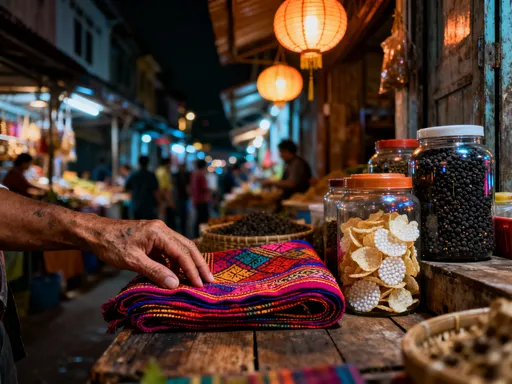
If there is one place that captures the soul of The Hague’s food culture, it is the Haagse Markt. Stretching nearly two kilometers through the Transvaal neighborhood, it ranks among the longest continuous street markets in Europe. Open six days a week, with peak energy on Thursdays and Saturdays, it is not merely a place to shop—it is a living, breathing expression of the city’s diversity. As you walk its length, you are enveloped in a symphony of sights, sounds, and scents: pyramids of ripe mangoes and plantains, baskets of dried chilies and coriander, the smoky sizzle of skewered meat over open grills, and the rhythmic call of vendors offering fresh produce at unbeatable prices.
The market is a crossroads of cultures. Here, Dutch housewives haggle over potatoes beside Surinamese grandmothers selecting okra for their next pot of saoto soup. Turkish bakers pull steaming loaves of flatbread from clay ovens, while Moroccan women stir giant pots of fragrant tagine. Children dart between stalls, clutching paper cones of warm, sugar-dusted stroopwafels made fresh before their eyes. The languages spoken—Dutch, Sranan Tongo, Arabic, Turkish, Berber—form a tapestry of human connection, each voice contributing to the market’s vibrant energy.
For food lovers, the Haagse Markt is a treasure trove. Along its route, you’ll find stalls specializing in regional specialties: one might offer pom, a Surinamese casserole made with grated pomtajer (a root vegetable), chicken, and citrus, slow-baked until golden and bubbling. Another serves dhalpuri, a yellow split-pea-stuffed flatbread, grilled and folded around curried vegetables or goat. These are not novelty foods made for tourists; they are staples of daily life, prepared with care and consistency. Many vendors have operated for decades, some even passing the business from parent to child, ensuring that recipes remain unchanged and flavors true to their origins.
What makes the Haagse Markt especially rewarding is its accessibility. Unlike curated food halls with elevated prices, this is a working market where locals come to feed their families. A full, satisfying meal can be had for under ten euros. There are no menus—just a nod toward what’s cooking, a few words exchanged, and a plate placed in your hands. It’s an experience that rewards curiosity and a willingness to step outside the familiar. And while the market may seem overwhelming at first, with its crowds and cacophony, it quickly becomes welcoming—a place where food breaks down barriers and creates instant community.
Surinamese Flavors: The Unexpected Heart of The Hague’s Cuisine
Among the many culinary influences in The Hague, none is more defining than that of Suriname. Once a Dutch colony in the northeastern corner of South America, Suriname gained independence in 1975, but its cultural ties to the Netherlands remain strong. Tens of thousands of Surinamese citizens relocated to Dutch cities during and after the transition, with The Hague becoming a primary destination. Today, it is estimated that Surinamese-Dutch communities make up a significant portion of the city’s population, and their culinary traditions have become woven into the city’s identity.
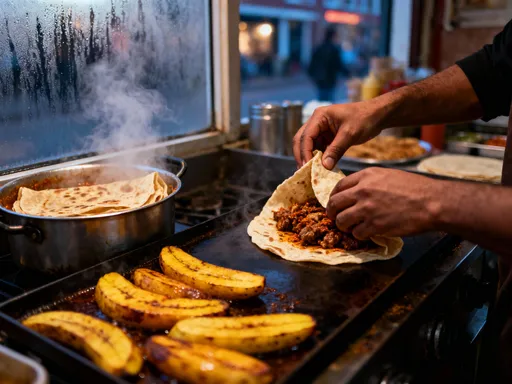
Surinamese cuisine is a fusion of African, Indian, Javanese, Indigenous, and Dutch influences, reflecting the country’s complex history. In The Hague, this diversity is celebrated in dishes that are rich, aromatic, and deeply comforting. The most iconic is roti, a flatbread of Indian origin served with a stew of meat or vegetables, tangy pickled onions, and a fiery chutney made from Scotch bonnet peppers. Whether filled with chicken, goat, or salted meat, each bite delivers layers of flavor—creamy, spicy, sour, and savory—all balanced by the soft, chewy texture of the bread.
Another beloved dish is moksi alesi, a one-pot meal of mixed rice, meats, and vegetables, often including salted beef, smoked sausage, and fried plantains. The name, derived from the Portuguese “mistura de arroz” (mixed rice), speaks to the dish’s Creole roots. It is the kind of food that is served at family gatherings, Sunday lunches, and celebrations—a symbol of abundance and togetherness. Equally cherished is saoto, a fragrant chicken soup made with peanut broth, lemongrass, and cassava, typically enjoyed with a side of vermicelli and fresh herbs.
What sets Surinamese food in The Hague apart is its authenticity. Unlike watered-down versions sometimes found in mainstream Dutch restaurants, the best renditions are served in small, unassuming takeaways tucked into residential blocks. These are often family-run, with recipes guarded like heirlooms. The food is not plated for aesthetics; it is portioned with generosity, meant to nourish and comfort. Many of these eateries operate on a cash-only basis, with no online presence, relying instead on word-of-mouth and loyal regulars. To find them, you must listen—to neighbors, to taxi drivers, to the scent of spices drifting from an open kitchen door.
Secret Spots: Finding Authentic Eateries Off the Beaten Path
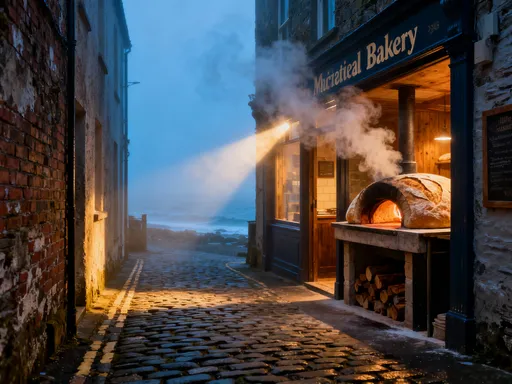
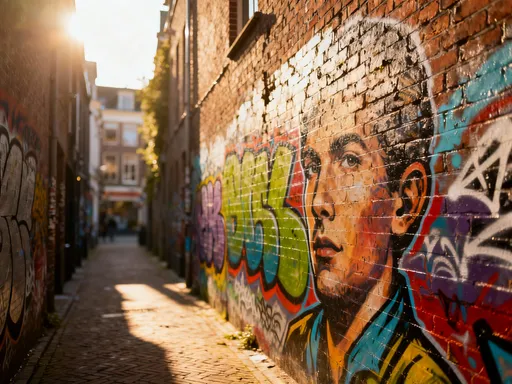
To truly taste The Hague as locals do, one must venture beyond the main roads and tourist maps. The most rewarding culinary discoveries are often found in neighborhoods like Transvaalbuurt, Schilderswijk, and Moerwijk—areas that may not appear in guidebooks but are rich in character and flavor. These districts are not designed for visitors; they are lived-in, dynamic, and full of life. Their streets are lined with modest shops, colorful murals, and corner bakeries where the scent of baking bread mingles with the aroma of frying spices.
In these neighborhoods, restaurants rarely advertise. Some have no signs at all, just a menu handwritten on a chalkboard in the window, often in multiple languages. Others are located above ground-floor shops or tucked into courtyards, accessible only if you know where to look. These are not destinations for fine dining—they are places where people come to eat well, affordably, and without pretense. The decor is functional, the chairs may be mismatched, and the service is often brisk. But the food? It is exceptional.
One might stumble upon a small Surinamese takeaway where the owner has been serving roti for over thirty years, her hands moving with the precision of decades of practice. Another block might host a Turkish pide bakery, where dough is stretched by hand and topped with spiced minced meat, feta, and peppers before being baked in a wood-fired oven. In the same area, a Moroccan family might run a café where mint tea is poured from a height to create a frothy top, and tagines simmer slowly throughout the day.
The key to finding these spots is conversation. Locals are often happy to share their favorite places, especially when approached with genuine interest. A simple “Where do you like to eat around here?” can lead to a warm recommendation and even an invitation to try something from the kitchen. These moments of connection are part of the experience—proof that food is not just sustenance, but a bridge between people. Walking tours led by residents are another excellent way to explore, offering insights that no guidebook can provide. They take you to hidden bakeries, introduce you to shop owners, and explain the stories behind the dishes.
Seafood with a Local Twist: Coastal Flavors Without the Crowds
Scheveningen, The Hague’s seaside district, is best known for its wide beach, Ferris wheel, and rows of fish stands selling kibbeling and herring to tourists. While these offerings are part of the local tradition, they represent only a fraction of how residents truly enjoy seafood. For a more authentic experience, one must look beyond the boardwalk. Early in the morning, before the crowds arrive, the real seafood culture comes alive at the Scheveningen fish auction and the family-owned viswinkels (fish shops) that source their catch directly from the harbor.
The daily fish auction, held at the harbor since the 19th century, is a spectacle of efficiency and freshness. Boats dock before dawn, unloading crates of North Sea cod, plaice, mackerel, and shrimp. Auctioneers move quickly, using a Dutch clock system to sell the catch within hours of landing. For locals, this is the source of the day’s best seafood. Many viswinkels open shortly after, displaying glistening fillets and whole fish on beds of ice. These shops often prepare ready-to-eat items—smoked mackerel sandwiches, herring with onions and pickles, or battered whitefish bites—using recipes passed down through generations.
What sets these preparations apart is their simplicity and quality. A broodje haring (herring sandwich) from a local viswinkel is not the overly salted version sometimes served to tourists. Instead, it features a fillet of just-caught herring, lightly cured, served on a soft bun with raw onions and a touch of gherkin. Similarly, kibbeling—battered and fried chunks of white fish—is made with fresh cod, not frozen, and served with a house-made remoulade that strikes the perfect balance of tang and spice. Some shops even offer regional specialties, such as eel in aspic or smoked eel on rye bread, dishes that reflect the Dutch coastal tradition.
For those willing to explore, Scheveningen’s marina area offers quieter spots where fishermen sell directly from their boats. These informal exchanges—cash in hand, fish still glistening—embody the essence of local seafood culture: fresh, honest, and deeply connected to the sea. It’s a reminder that in The Hague, even the most tourist-heavy areas hold pockets of authenticity for those who know where to look.
From Street Food to Slow Bites: The Rhythm of Eating in The Hague
In The Hague, food is not reserved for special occasions. It is woven into the fabric of daily life, shaping routines and rituals. Meals are often quick, practical, and deeply satisfying—a broodje gezond (healthy sandwich) filled with cucumber, tomato, and egg from a corner shop; a warm stroopwafel bought during a morning market run; a paper cone of patat (fries) shared with a friend after work. These are not gourmet experiences, but they are meaningful, reflecting a culture that values both convenience and flavor.
The influence of immigrant food cultures has enriched this everyday eating. The concept of the “snackable meal”—portable, flavorful, and affordable—has been embraced and adapted. A Surinamese roti wrap is now a common lunch option. A Turkish döner or pide might be eaten standing at a counter. These foods have become part of the Dutch urban diet, not as foreign imports, but as natural elements of the city’s culinary landscape. Schoolchildren might bring a slice of pom in their lunchbox; office workers might pick up a dhalpuri on the way home.
Yet there is also a slower rhythm to eating in The Hague. Even in busy neighborhoods, families gather for Sunday dinners, often centered around a large pot of stew or a baked casserole. Coffee breaks are still observed with care, accompanied by a slice ofvlaai (a fruit-filled tart) or a piece of speculaas (spiced biscuit). The pace may vary, but the intention remains the same: to nourish, to connect, to take a moment in the day to savor something good.
This balance—between quick bites and shared meals—reflects the city’s character. It is efficient but warm, diverse but cohesive. Food is not a performance; it is a practice, a way of living. And in that simplicity lies its beauty.
How to Eat Like a True Hagenaar: Practical Tips for Food Explorers
To experience The Hague’s food culture authentically, a few practical tips can make all the difference. First, visit the Haagse Markt early in the day, preferably before noon on a Thursday or Saturday. This is when the selection is freshest and the atmosphere most vibrant. Bring cash—many vendors do not accept cards, and ATMs may be scarce within the market.
Don’t be afraid to point. If the menu is in a language you don’t understand, look at what others are eating and gesture toward it. Most vendors are used to this and will respond with patience and a smile. Embrace the no-frills settings. Some of the best meals are served on plastic plates at folding tables, with no tablecloths or ambient lighting. The lack of decor is not a sign of poor quality—it’s a sign that the focus is on the food.
Ask locals for recommendations. A simple “What do you suggest?” at a market stall or neighborhood shop can lead to a memorable dish. Be respectful in your curiosity. Show appreciation for the food and the people who make it. A thank you, even in broken Dutch, goes a long way.
Finally, be patient. Lines may form at popular stalls. Orders may take time. But these moments are part of the experience—the chance to observe, to listen, to absorb the rhythm of the place. Eating like a Hagenaar is not about perfection; it’s about presence. It’s about being open to surprise, to connection, to the simple joy of a meal made with care.
The Hague doesn’t shout about its culinary treasures. They’re tucked away, passed on, shared quietly among those who know. But for those willing to look beyond the postcard image, the city offers a feast of stories, flavors, and human connection. It’s not just about what’s on the plate—it’s about who made it, why, and how it ended up here. In The Hague, every meal is a chapter in a much bigger story. All you have to do is take a seat—and take a bite.