You Won’t Believe This Hidden Side of Sicily’s Wild Terrain
Sicily isn’t just about ancient ruins and coastal towns—its real magic lies off the map. I ventured beyond the crowds and found landscapes so raw and surreal, they felt like another planet. From volcanic badlands to secret gorges carved by time, this island’s untamed terrain shocked me. If you're craving something truly different, let me take you deep into Sicily’s best-kept geological secrets—where adventure meets authenticity and every trail tells a story.
Beyond Beaches: Discovering Sicily’s Untamed Geography
Sicily is often celebrated for its sun-drenched shores, Baroque cities, and the ever-present shadow of Mount Etna. Yet beneath these familiar postcard images lies a far wilder truth—one shaped by fire, water, and tectonic drama. The island sits at the restless boundary where the African and Eurasian tectonic plates collide, a slow-motion collision that has lifted mountains, cracked valleys, and birthed volcanoes over millions of years. This powerful geologic engine has crafted a landscape of astonishing variety, much of which remains unseen by the average visitor.
While most travelers stay close to the coast, the island’s interior reveals a different Sicily—one of high plateaus, deep canyons, and ancient forests. These regions are not just scenic; they are living records of Earth’s forces. The terrain tells stories of lava floods, glacial retreats, and centuries of erosion that have sculpted stone into delicate arches, jagged ridges, and hidden basins. It is a land where nature speaks in bold gestures, and silence often carries more weight than sound.
What makes this wild geography so compelling is not just its beauty, but its accessibility. Many of these remote areas are within a two-hour drive of major tourist hubs like Palermo or Catania. Yet, due to lack of signage, limited public transport, or simply the inertia of well-trodden itineraries, they remain overlooked. For those willing to stray from the guidebook, the reward is solitude, authenticity, and a deeper connection to the island’s soul. This is not tourism as performance—it is travel as discovery.
The Forbidden Beauty of the Madonie Mountains
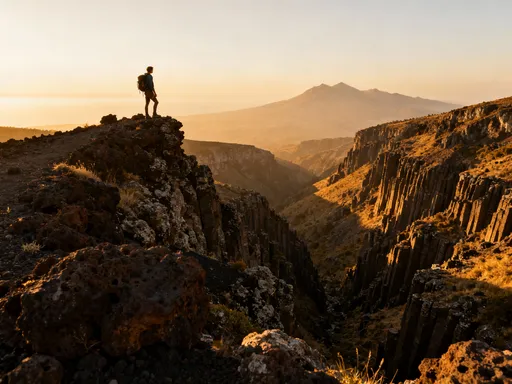
Rising in the heart of northern Sicily, the Madonie mountain range is a realm of quiet grandeur. Stretching over 40 kilometers, this rugged chain features some of the island’s highest peaks, including Pizzo Carbonara, which reaches 1,979 meters. Unlike the more famous slopes of Etna, the Madonie remain refreshingly free of tourist congestion. Here, the air is crisp, the trails are unspoiled, and the forests are ancient. The region is home to one of the last stands of Sicilian beech trees, a relic population that has survived since the last ice age.
Hiking through the Madonie feels like stepping into a forgotten world. Paths wind through dense woodlands, cross crystal-clear mountain streams, and open onto panoramic plateaus where wild herbs perfume the breeze. The silence is profound—broken only by the rustle of a lizard in the underbrush or the distant call of a kestrel. Wildlife thrives in this protected environment, including the rare Sicilian pond turtle and the endangered Sicilian shrew. Birdwatchers may spot golden eagles soaring above the ridgelines, while early risers might glimpse roe deer grazing in misty clearings.
Scattered throughout the range are small villages that cling to centuries-old traditions. Polizzi Generosa, perched at 1,060 meters, is a gem of medieval architecture and local craftsmanship. Its stone houses, narrow alleys, and hillside gardens reflect a way of life that has changed little over generations. Local festivals still honor agricultural cycles, and family-run inns serve dishes made from garden-grown vegetables, wild mushrooms, and mountain cheeses. These communities are not performing for tourists—they are living, and their quiet dignity adds depth to the experience.
Despite its proximity to Palermo—less than 100 kilometers away—the Madonie remain under the radar. Part of the reason is the lack of direct marketing, but another is the terrain itself. The roads are winding, the signage is minimal, and the trails require a moderate level of fitness. Yet these very challenges are what preserve the region’s authenticity. For the thoughtful traveler, the effort is repaid not in convenience, but in connection—with nature, with history, and with a slower, more meaningful rhythm of life.
Walking on Mars: The Alcantara Gorges
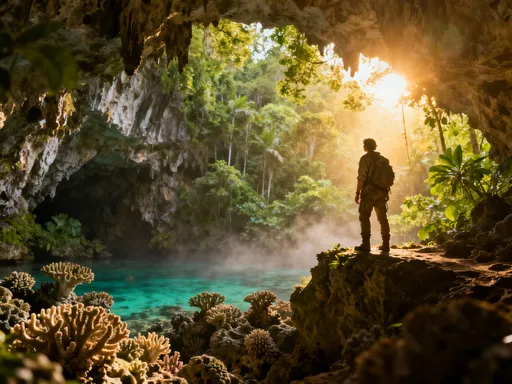
If any place on Earth resembles a Martian canyon, it is the Alcantara Gorges. Carved over thousands of years by the Alcantara River as it flowed through layers of solidified lava, this narrow canyon is a masterpiece of natural architecture. The result is a corridor of towering basalt walls, their surfaces composed of perfectly formed hexagonal columns that rise like the pillars of an ancient temple. Sunlight filters through the narrow slit above, casting shifting patterns on the smooth, dark stone and illuminating the emerald-green waters below.
The gorges were formed when lava from Mount Etna—erupting over 10,000 years ago—poured into the riverbed. The intense heat of the molten rock met the cold water, causing rapid cooling and contraction. This process, known as columnar jointing, created the geometric rock formations that now line the canyon. The effect is both eerie and beautiful, like walking through the ribcage of a stone giant. The walls, some reaching 20 meters high, feel almost too symmetrical to be natural, yet every crack and curve bears the signature of time and elemental force.
Visitors can explore the gorges through guided river walks, which allow safe passage along the slippery basalt floors. Wearing neoprene shoes and helmets, travelers wade through shallow pools, climb over smooth boulders, and squeeze through narrow passages where the walls press close. The experience is immersive—cool mist rises from the water, the sound of flowing streams echoes off the stone, and the air carries a mineral freshness. It is not a passive sightseeing stop; it is an active journey through a living geological sculpture.
Two main access points—Gorgia dell’Alcantara and Lavacaricoli—offer different perspectives. The former is more developed, with changing facilities and safety briefings, making it ideal for families. The latter is wilder, less crowded, and better suited to experienced hikers seeking solitude. Regardless of the route, all visitors are required to go with licensed guides, a rule that ensures both safety and environmental protection. These gorges are fragile, shaped by forces that took millennia to unfold, and they demand respect.
Sicily’s Volcanic Heart: Beyond Mount Etna’s Crowds
Mount Etna draws thousands of visitors each year, many of whom take cable cars to the upper slopes or join group tours to the summit craters. While impressive, these experiences often feel commercialized, with crowds, gift shops, and hurried itineraries. But Etna is more than a tourist attraction—it is a vast, evolving wilderness. For those willing to explore beyond the main routes, the volcano offers remote valleys, lava fields, and highland plateaus where solitude is still possible.
One of the most striking of these hidden zones is the Valle del Bove, a massive depression on Etna’s eastern flank. Formed by ancient collapses and repeated eruptions, this horseshoe-shaped valley stretches over five kilometers and plunges 1,000 meters deep. Its barren slopes are covered in black lava flows, twisted into surreal shapes by cooling and gas expansion. From above, the valley resembles a scar on the landscape—a testament to the volcano’s destructive and creative power. Hiking here feels like walking on the surface of the moon, with no vegetation, no sound, and an eerie stillness broken only by the wind.
Another lesser-known area is the Maletto highlands, located on Etna’s western side. At over 1,000 meters in elevation, this region experiences colder temperatures and occasional snowfall, creating a stark contrast to Sicily’s typical Mediterranean climate. The landscape is dotted with ancient lava flows, now partially reclaimed by hardy grasses and juniper bushes. Stone shepherd huts, abandoned for decades, stand as silent witnesses to a pastoral past. Few tourists come here, but local guides occasionally lead small groups through the trails, sharing stories of eruptions, land use, and the resilience of mountain communities.
Exploring these remote volcanic zones requires preparation. Sturdy hiking boots, layered clothing, and plenty of water are essential. The terrain is uneven, the weather unpredictable, and cell service often nonexistent. Guided tours are highly recommended, not only for navigation but also for safety. Knowledgeable guides can interpret the geology, point out signs of recent activity, and ensure visitors stay on safe paths. The reward is a rare intimacy with one of Europe’s most dynamic natural forces—a chance to witness the island’s fiery heart up close, without the noise of the crowd.
The Lost Valleys of the Hyblean Plateau
In southeastern Sicily, far from the volcanic north, lies a quieter geological story—the Hyblean Plateau. This elevated limestone region, rising to about 900 meters, is a land of gentle hills, dry riverbeds, and mysterious sinkholes known as dolines. Unlike the dramatic peaks of the Madonie or the black lava fields of Etna, the Hyblean landscape is subtle, almost understated. Yet its beauty lies in its stillness, its ancient stones, and the way light plays across open fields at dawn and dusk.
The plateau’s geology is shaped by karst processes—water slowly dissolving limestone over thousands of years. This has created a network of underground caves, fissures, and aquifers, many of which remain unexplored. On the surface, the terrain is marked by circular depressions, rocky outcrops, and clusters of olive trees that twist from the thin soil. Dry stone walls, built by generations of farmers, crisscross the land, forming a patchwork of small fields. These walls are not just functional; they are cultural artifacts, built without mortar, stone upon stone, and standing as a testament to human patience and adaptation.
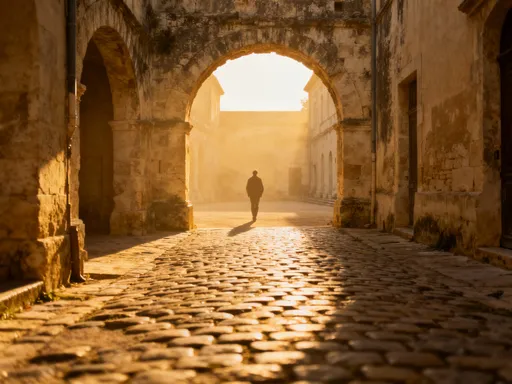
Towns like Ragusa and Modica, perched on limestone ridges, serve as gateways to the plateau. Their Baroque churches and honey-colored buildings are UNESCO-listed treasures, but the real wonder lies in the countryside between them. Here, abandoned farmhouses with collapsed roofs stand beside working orchards. Wild capers grow in the cracks of ancient walls, and almond trees bloom in early spring, painting the hills in soft pink. The pace of life is slow, the air is clean, and the sense of history is palpable.
Visitors can explore the plateau on foot or by bicycle, following rural trails that connect villages and farms. Local agriturismi—family-run farm stays—offer authentic accommodations and meals made from estate-grown ingredients. Some even host cheese-making demonstrations or wine tastings featuring Nero d’Avola, a robust red grape native to the region. These experiences are not staged for tourists; they are part of daily life, shared with warmth and simplicity. To travel here is to step into a Sicily that exists beyond postcards—a place where geology and agriculture, past and present, are deeply intertwined.
Coastal Secrets: Where Cliffs Meet the Tyrrhenian Sea
Sicily’s northern coastline is often associated with fishing villages and ferry ports, but in between lie stretches of raw, untouched beauty. Along the Tyrrhenian Sea, the land rises sharply into cliffs that have been carved by wind, waves, and tectonic uplift. These coastal formations are especially dramatic in protected areas like the Zingaro Nature Reserve and the wild headlands near Capo Rama. Here, the sea crashes against sheer rock faces, creating sea caves, natural arches, and hidden coves accessible only by foot or boat.
Zingaro, located between San Vito Lo Capo and Scopello, is one of Sicily’s first nature reserves and remains a model of conservation. Its coastal trail—about 7 kilometers long—winds through maquis shrubland, past freshwater springs, and along cliffside paths with breathtaking views. The trail is well-maintained but not overcrowded, thanks to daily visitor limits and a commitment to low-impact tourism. At several points, stone staircases lead down to pebble beaches where the water is so clear it reveals every shell and fish. These coves are not for sunbathing crowds; they are for swimming, reflection, and quiet moments with nature.
Further east, near the village of Cefalù, the coastline becomes even more rugged. Capo Rama, a promontory jutting into the sea, offers some of the most dramatic sea cliffs on the island. The area is largely undeveloped, with no roads or facilities, making it a destination for experienced hikers and nature photographers. The trail to the cape is steep and unmarked in places, but the reward is a panoramic view of the Tyrrhenian Sea, with waves pounding against black volcanic rock far below. On clear days, the Aeolian Islands are visible on the horizon, adding to the sense of being at the edge of the known world.
Coastal trekking in these areas requires caution. Paths can be slippery, especially after rain, and there are no lifeguards or emergency services nearby. Travelers should carry water, wear sturdy shoes, and avoid venturing too close to cliff edges. The sea here is powerful, and sudden waves can sweep across rocky platforms. But for those who respect the environment and travel responsibly, these coastal secrets offer some of the most memorable experiences in Sicily—a chance to witness the island’s wild soul where land and sea collide.
How to Travel These Terrains Responsibly and Authentically
Exploring Sicily’s hidden landscapes is a privilege, not a right. These regions are fragile, shaped by forces that operate on geological timescales, and they can be easily damaged by careless behavior. Responsible travel begins with timing. The best seasons for hiking are spring (April to June) and autumn (September to October), when temperatures are mild, wildflowers are in bloom, and the trails are less crowded. Summer can be dangerously hot, especially in inland areas, while winter brings rain and snow to the highlands, making some paths impassable.
Local guides are invaluable. They not only ensure safety but also enrich the experience with knowledge of geology, history, and local customs. Many are certified by regional parks or environmental organizations and speak fluent English. Hiring a guide supports rural economies and promotes sustainable tourism. Group sizes are typically small—no more than eight people—allowing for a more personal and respectful interaction with the environment.
Transportation remains a challenge. Public transit to remote areas is limited, so renting a car is often necessary. However, travelers should choose fuel-efficient models and share rides when possible. Once on the trail, the principles of Leave No Trace apply: pack out all trash, stay on marked paths, avoid picking plants or disturbing wildlife, and refrain from carving names or symbols into rock. These landscapes are not ours to claim—they are ours to witness and protect.
Equally important is cultural respect. In small villages, dress modestly, ask permission before photographing people, and support local businesses by eating at family-run trattorias or buying handmade crafts. Many communities welcome visitors not for profit, but for connection. When you sit down for a meal in a mountain inn or listen to an elder recount local legends, you are not just passing through—you are participating in a living tradition.
Ultimately, traveling Sicily’s wild terrain is about more than sightseeing. It is about slowing down, paying attention, and recognizing that beauty often lies beyond the obvious. These landscapes are not just destinations; they are teachers. They remind us of Earth’s power, time’s patience, and the quiet dignity of places that ask for nothing but to be left in peace. To visit them with care is to honor not only the island, but the very spirit of travel itself.