You Won't Believe What I Found in Belgrade's Forgotten Corners
Walking through Belgrade, I didn’t expect to stumble upon such powerful stories hidden in plain sight. The city’s landmark buildings aren’t just structures—they’re living echoes of history, resilience, and reinvention. From Ottoman-era facades to bold communist architecture, each corner reveals a chapter of Serbia’s complex past. What makes these buildings unforgettable isn’t just their design, but the way they’ve shaped the city’s soul. This is more than sightseeing—it’s real discovery.
Arrival in Belgrade: First Impressions That Mislead
Belgrade greets visitors with a symphony of contrasts. The moment one steps off the train or exits the taxi at Slavija Square, the city unfolds in layers—a mosaic of architectural styles clashing and coexisting. The hum of scooters weaves through traffic, street vendors call out in Serbian, and the Danube and Sava rivers shimmer beyond the urban sprawl. At first glance, the capital of Serbia appears unpolished, even chaotic, with cracked sidewalks and buildings bearing the marks of time. Yet this initial impression is precisely what makes Belgrade so compelling: its true character is not on the surface, but embedded in the weathered walls and forgotten alleyways that tourists often overlook.
Many travelers arrive expecting grand European plazas and picture-perfect streetscapes, only to find a city that resists easy categorization. The charm of Belgrade isn’t in manicured parks or restored facades, but in its authenticity. Here, a 19th-century villa stands next to a Soviet-style apartment block, while a medieval fortress overlooks modern cafes. This architectural dissonance isn’t accidental—it’s a testament to centuries of cultural shifts, invasions, and rebirths. The city has been ruled by Romans, Ottomans, Austro-Hungarians, and Yugoslavs, each leaving behind physical and cultural imprints. As a result, Belgrade does not conform to the tidy narratives often found in guidebooks.
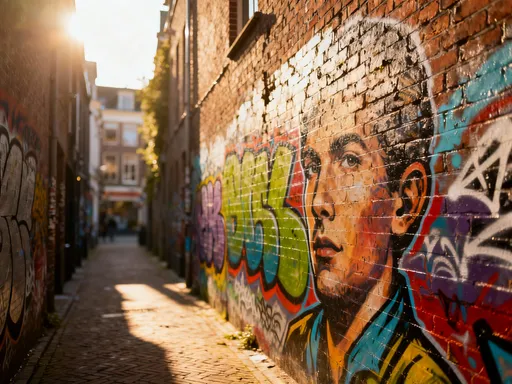
What becomes clear after just a few hours of wandering is that Belgrade’s most meaningful landmarks are not always the ones with plaques or tour groups. Some of the most powerful stories reside in structures that appear unremarkable at first: a crumbling doorway, a faded fresco on a side street, or a former government building now used as a warehouse. These overlooked sites often carry deeper historical weight than the polished attractions. They speak of resilience, adaptation, and the quiet persistence of identity through upheaval. For the thoughtful traveler, the real journey begins not with checking off monuments, but with learning to see beyond the obvious.
The Old Palace and Modern Power: Architecture as a Political Statement
At the heart of Belgrade stands the Stari Dvor, or Old Palace, a grand Neoclassical building that has witnessed more than a century of political transformation. Located in Republic Square, the city’s central hub, the palace was completed in 1891 during the reign of King Milan Obrenović. Designed by architect Aleksandar Bugarski, its symmetrical façade, Corinthian columns, and ornate interiors were intended to project the legitimacy and sophistication of the Serbian monarchy. With its limestone façade and copper dome, the building was a declaration: Serbia was no longer a provincial outpost, but a modern European state.
Yet the Old Palace has served far more than ceremonial functions. It survived the bombings of both World Wars, endured the fall of the monarchy, and transitioned into the seat of socialist administration after 1945. Today, it houses the City Assembly of Belgrade, continuing its role as a center of civic power. This continuity is remarkable—few buildings in Europe have remained at the heart of governance through such dramatic regime changes. The palace’s ability to adapt, without losing its architectural integrity, speaks to a deeper truth about Belgrade: the city absorbs change without erasing its past.
The Neoclassical style of the Old Palace was no accident. In the late 19th century, European monarchies used Greco-Roman architectural forms to align themselves with ideals of democracy, order, and cultural prestige. For Serbia, newly independent from Ottoman rule, the choice of style was a statement of national aspiration. The palace was not merely a residence or office—it was a symbol of sovereignty. Even under socialist rule, when overt monarchist symbols were removed, the building was preserved rather than replaced. This decision reflects a broader Serbian tendency to repurpose rather than destroy, to find utility in heritage rather than discard it.
Visitors today can admire the palace from the outside, observing its balanced proportions and intricate stonework. While the interior is not regularly open to the public, its presence in Republic Square ensures that it remains a focal point of civic life. Nearby, the statue of Prince Mihailo stands atop a horse, facing the palace as if in silent dialogue. Together, they form a visual narrative of leadership, legacy, and the enduring role of architecture in shaping national identity. To understand Belgrade is to recognize that its landmarks are not frozen in time, but active participants in the city’s ongoing story.
New Belgrade and the Brutalist Giants
Just across the Sava River lies a different Belgrade—one shaped by 20th-century ambition and socialist ideology. New Belgrade (Novi Beograd) emerged in the late 1940s as a planned urban district, designed to house thousands of workers and symbolize the modernization of post-war Yugoslavia. This area represents one of the most extensive examples of socialist urban planning in Europe, with wide boulevards, modular apartment blocks, and monumental public buildings. Among its most iconic structures is the Western City Gate, commonly known as the Genex Tower, a twin-tower complex that has become a defining silhouette of the city’s skyline.
Completed in 1980, the Genex Tower was designed by Mihajlo Mitrović and stands 118 meters tall. One tower serves as a residential block, while the other houses offices, connected at the top by a rotating restaurant—a futuristic touch for its time. The design blends Brutalist massiveness with modernist elegance, using raw concrete and geometric forms to convey strength and progress. At night, illuminated by strategic lighting, the structure takes on a sculptural quality, reminding viewers that even utilitarian architecture can aspire to artistry.
Brutalism, often misunderstood as cold or oppressive, was in fact deeply ideological in Yugoslavia. The style emphasized functionality, collective living, and the rejection of bourgeois ornamentation. In New Belgrade, entire neighborhoods were built using prefabricated concrete panels, allowing for rapid construction to meet housing demands. These buildings were not just shelters—they were physical manifestations of socialist values: equality, efficiency, and communal purpose. While some critics dismissed them as monotonous, others recognized their ambition to create a new kind of urban life.
Today, attitudes toward Brutalist architecture in Belgrade are shifting. Once seen as relics of a bygone era, these structures are now being reevaluated as cultural heritage. Preservationists argue that they represent a unique chapter in architectural history—one that embraced innovation and social vision. Some buildings have been renovated, with façades cleaned and public spaces revitalized. The Genex Tower, despite its aging infrastructure, remains a beloved landmark, often featured in photography and film. For visitors, exploring New Belgrade offers a chance to engage with a different kind of beauty—one rooted in scale, form, and historical context rather than ornament.
Sacred Spaces: Where Faith Meets Fortress Design
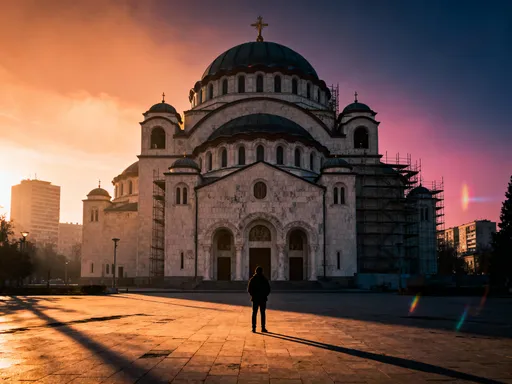
Rising above the city like a marble sentinel, the Church of Saint Sava is one of the most striking religious buildings in the Balkans. Located on the Vračar plateau, the site holds profound historical and emotional significance. It is believed to be the place where the Ottoman Empire burned the relics of Saint Sava, a 13th-century Serbian archbishop and national symbol, in 1595 as a punishment for rebellion. For centuries, the spot remained a place of mourning. In the 20th century, plans began to construct a church of monumental scale to honor his legacy—a project that continues to this day.
The current structure, under construction since 1935 with interruptions due to war and political change, is now one of the largest Orthodox churches in the world. Its central dome reaches 79 meters high, and the interior is designed to accommodate over 10,000 worshippers. The façade is clad in white marble, and the exterior mosaics, still being installed, depict biblical and Serbian historical figures. From a distance, the church resembles a fortress more than a place of worship—its massive columns and elevated position giving it an aura of strength and permanence.
The architectural style blends Byzantine and Serbian medieval influences, creating a design that is both timeless and symbolic. The use of domes, arches, and richly decorated interiors reflects the spiritual grandeur of Eastern Orthodoxy. Yet the church’s scale and prominence also serve a national purpose: it stands as a testament to cultural endurance. Built on a site of historical trauma, it transforms pain into pride, memory into monument. For many Serbians, the Church of Saint Sava is not just a religious site, but a symbol of identity and resilience.
While the interior remains partially unfinished, visitors are permitted to enter and experience its vast, echoing space. Sunlight filters through high windows, illuminating the intricate stonework and the beginnings of gold-leaf mosaics. The atmosphere is solemn, yet uplifting—a space designed to inspire awe and reflection. Nearby, a museum and visitor center provide historical context, helping guests understand the centuries-long journey from tragedy to commemoration. For travelers interested in the intersection of faith, history, and architecture, the church offers a rare depth of meaning that transcends aesthetics.
Hidden Layers: Adaptive Reuse and Urban Revival
One of the most exciting developments in contemporary Belgrade is the growing movement to repurpose historic buildings for modern use. As the city evolves, there is increasing recognition that preservation does not mean freezing structures in time, but allowing them to serve new functions while honoring their past. Nowhere is this more evident than in the ongoing debate surrounding the Belgrade Main Railway Station. Once the city’s primary rail hub, the station ceased operations in 2018 due to the construction of a new transportation corridor. Its grand façade, a blend of interwar modernism and classical elements, remains intact, but its future is uncertain.
The station has become a focal point for cultural discussion. Some advocate for its conversion into a museum or cultural center, while others fear it may be demolished or replaced by commercial development. What makes the debate significant is not just the building itself, but what it represents: the tension between progress and memory. Belgrade is a city in motion, expanding its infrastructure and attracting foreign investment, but at what cost to its architectural soul? The railway station, like many underused buildings, poses a question: can a city modernize without losing its character?
There are encouraging signs of adaptive reuse throughout the city. Former industrial sites along the Sava River are being transformed into creative hubs, housing art galleries, design studios, and boutique cafes. One notable example is the Savamala district, where old warehouses have been repurposed into cultural venues. These projects demonstrate that historical buildings can be economically viable while retaining their identity. By integrating old structures into contemporary life, Belgrade can tell a continuous story rather than a fragmented one.
The challenge lies in balancing preservation with practicality. Not every building can be saved, nor should they be. But selective restoration and creative reinvention offer a middle path. When done thoughtfully, adaptive reuse strengthens community identity, supports sustainable development, and enriches the urban experience. For visitors, these revitalized spaces offer more than visual appeal—they provide insight into how Belgrade is negotiating its past and future. To walk through a converted factory or a former government office turned gallery is to witness history in dialogue with the present.
Navigating the City: Practical Insights for Deep Exploration
To truly appreciate Belgrade’s architectural diversity, one must move beyond the typical tourist routes and embrace a slower, more intentional form of exploration. The city is best experienced on foot, particularly in the central districts of Stari Grad (Old Town) and Dorćol, where layers of history are packed within a few square kilometers. A recommended starting point is Kalemegdan Fortress, which offers panoramic views of the confluence of the Sava and Danube rivers. From there, a walk down Knez Mihailova Street leads to Republic Square and the Old Palace, creating a natural arc through the city’s historical spine.
For those interested in 20th-century architecture, a tram or bus ride to New Belgrade is essential. Line 7 or 11 provides a direct route across Branko’s Bridge, offering views of the Genex Tower as you enter the district. Exploring on foot allows visitors to appreciate the scale and rhythm of the socialist-era blocks. Early morning or late afternoon visits are ideal, when the low sunlight accentuates the textures of concrete and glass. Combining the visit with a stop at the Museum of Contemporary Art, located in a striking modernist building within a park, adds cultural context.
Local maps, both digital and printed, are valuable tools. The Belgrade City Map, available at tourist centers, highlights key architectural sites and walking routes. Apps like Google Maps or Maps.me work well for navigation, though offline downloads are recommended in case of spotty connectivity. Public transportation is efficient and affordable, with single tickets costing a few euros, making it easy to transition between historic and modern zones without fatigue.
To avoid burnout, pair architectural visits with moments of rest. A coffee at one of the many sidewalk cafes in Skadarlija, Belgrade’s bohemian quarter, offers both refreshment and atmosphere. Small museums, such as the Nikola Tesla Museum or the Ethnographic Museum, provide indoor respite and deeper insight into Serbian culture. Timing visits to coincide with local events, such as open gallery nights or architectural tours, can also enhance the experience. The key is to treat exploration not as a checklist, but as a journey of discovery, allowing time for unexpected encounters and quiet observation.
Why These Buildings Matter Beyond Aesthetics
Belgrade’s landmark buildings are more than architectural achievements—they are storytellers. Each structure carries within it the memory of empires risen and fallen, of wars endured, and of identities preserved against the odds. The Old Palace speaks of monarchy and democracy, the Genex Tower of socialist ambition, the Church of Saint Sava of faith and resistance, and the repurposed stations and factories of renewal. Together, they form a narrative of survival and adaptation that defines the Serbian spirit.
For travelers, engaging with these buildings offers a deeper connection to the country than any souvenir or snapshot can provide. It allows for a form of empathy—a chance to walk through spaces that have witnessed joy, sorrow, and transformation. Understanding the history behind a façade or the symbolism in a dome enriches the travel experience, turning sightseeing into meaningful engagement. This kind of travel is not passive; it requires curiosity, patience, and a willingness to look beyond the surface.
Moreover, Belgrade challenges the notion that beauty lies only in perfection. Its power comes from its scars, its contrasts, its unfinished projects and weathered walls. In a world where many cities are homogenized by global development, Belgrade stands out for its authenticity. It does not cater to expectations; it invites interpretation. To explore its forgotten corners is to participate in an ongoing conversation about memory, identity, and the role of architecture in shaping collective life.
So the next time you plan a trip to the Balkans, look beyond the guidebook highlights. Seek out the quiet monuments, the overlooked alleys, the buildings that don’t make the postcards but speak the loudest. In Belgrade, the most unforgettable discoveries are not found in polished attractions, but in the spaces where history whispers—if you take the time to listen.